The Stool We Don’t Sell: Holding Space for the Unplanned Dinner
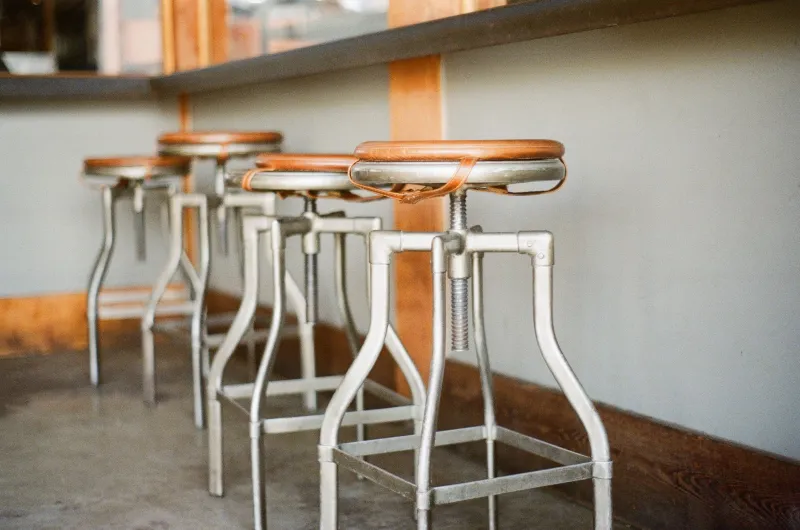
There is a stool at our counter that never appears on the reservation screen. It is not broken. It is not roped off for a VIP. It is not a staging prop for photos of seasonal plates. At 5:30 p.m. every evening, someone on our team walks to the host stand, looks at the room, and releases it—one seat, in person, first come, first served. No online booking. No deposit. No secret handshake.
We call it the neighborhood seat.
Why We Hide a Seat From the Internet
Reservation software is very good at turning a restaurant into a calendar. Every table becomes a slot, every slot becomes a promise, and every promise becomes a number someone can optimize. That is useful. It keeps a small room from turning into chaos. But a room that is 100 percent bookable is also a room that is 100 percent closed. There is no slack, no surprise, no place for the line cook who just got off early or the neighbor who decided at 5:12 that she did not want to cook.
So we hold one seat back. Not because we are sentimental about empty chairs—we are not; empty chairs are expensive—but because a neighborhood restaurant needs a little porosity. The stool is a design choice disguised as a quirk. It keeps us accountable to the street outside, not just the confirmation emails inside.
The 5:30 Rule, Explained
The seat is held off the reservation system all day. At 5:30, our host releases it to the first person at the stand who wants it. If you are reading this on your phone at 5:31, you are already late. It is not a waitlist you can join from the couch. It is not a lottery. It is a physical seat in a physical room, and the only way to claim it is to be there.
A few ground rules keep it fair. The seat is for one person. If you arrive as a pair, ask about the counter generally, but do not expect us to split the stool in half. It is a full-service seat, not a co-working desk—please order dinner, not just a coffee and a laptop. And if someone else is already settling in, that is the end of the conversation. The host does not negotiate. The stool is not a prize; it is a small piece of housekeeping.
Who Actually Sits There
A line cook from a restaurant a few blocks away, still smelling of stock and fryer oil, sits there on Mondays. A nurse who works nights claims it on Thursdays before her shift. A regular who moved across the bay takes it when she is in the neighborhood and does not want to plan three weeks ahead. A tourist who could not get a table online once sat there with a notebook and ordered every vegetable on the menu. None of these are real names, but they are real patterns. The seat collects people who are already out in the city, not people who are managing the city from a screen.
That is the ethical case, and it is also the practical one. Hospitality workers rarely know their schedules far enough out to book a Friday at 7. Neighborhood people sometimes decide to eat at the last minute. Solo diners get pushed to the bar anyway. The stool gives all of them a door that is not a calendar invite.
The Math Nobody Puts on the Menu
On paper, the seat costs us. If it were bookable, it would be a cover most nights, maybe two turns on a busy weekend. In a twenty-eight-seat room, that is not nothing. But the calculation is incomplete if it only counts revenue. The stool buys us a walk-in culture, a little goodwill, and a safety valve for the nights when the reservation grid is tight but the neighborhood is restless. It also eliminates a no-show problem entirely: an unbooked seat cannot fail to show up.
We are not claiming this is a scalable model. A hundred-seat restaurant cannot hold a stool for the block without turning it into a customer-service gimmick. But a tiny room can. And in a city where desirable reservations disappear in minutes, a seat that refuses to be optimized feels less like a hole in the system and more like a reminder that the system is not the whole point.
How to Claim It in 2026
If you want the stool, treat it like a walk-in, not a reservation. Arrive between 5:15 and 5:25. Ask the host directly about the neighborhood seat. Do not call, do not DM, do not refresh the booking page—it will never appear there. Tuesday and Wednesday are easier than Friday and Saturday. Come solo, or come ready to sit solo while your companion waits elsewhere. If you work in hospitality, mention it only if it comes up naturally; we do not require a pay stub, and we do not award points for suffering.
If the seat is taken, ask about later counter cancellations. It is not the same stool, but it is the same spirit. And if you do get it, do not camp. Order dinner, enjoy it, and let the room breathe. The seat is held for the neighborhood, not for one person’s entire evening.
What the Empty Stool Teaches Us
The stool looks empty for most of the day. It is not. It is held. In 2026, when every square foot of a restaurant can be tracked, priced, and pre-sold, holding one seat back is a small act of stubbornness. It keeps the room a little unfinished. It lets the city walk in.
That is the table we never list. It is also the one we are proudest to set.