The Shortest Food Chain in San Francisco Starts in a Wheelbarrow
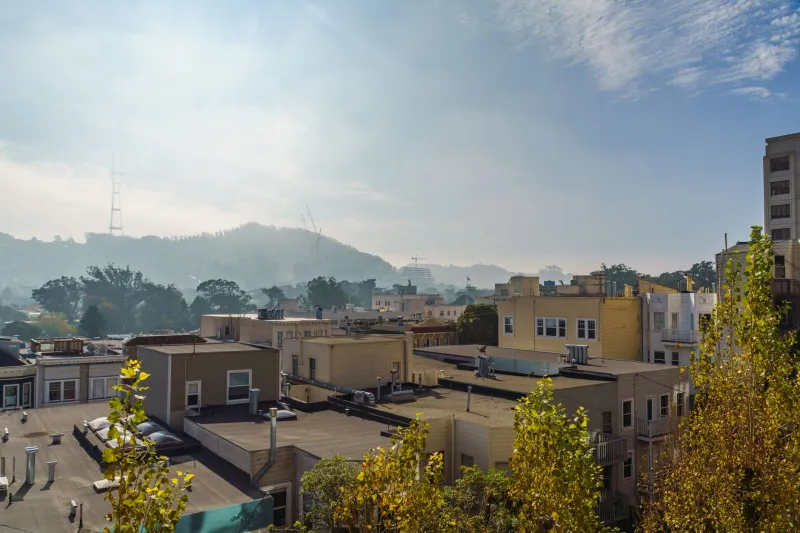
On Tuesday mornings before the dining room opens, our kitchen receives the strangest delivery schedule in San Francisco. A cargo bike rolls up from Alemany with flats of Cherokee tomatoes. A woman named Ruth carries a crate of honey across 24th Street on foot — literally on foot, because the beekeeper who supplies our dessert program lives four blocks away. A school garden coordinator drops off a paper bag of surplus kale that the kids didn't get to.
None of these ingredients passed through a distributor. None of them have a barcode. And none of them traveled farther than three miles from soil to our back door.
We call it the 3-Mile Menu, and it's less a marketing gimmick than an honest accounting of what happens when you let the neighborhood feed you.
Tuesday, 7:40 AM: The Cargo Bike
Marcus pedals up from the Alemany Farmers' Market plots with whatever the fog let him grow that week. This time of year, that means chicories, radishes with dirt still clinging to them, and the first dry-farmed early tomatoes — small, dense, almost aggressively flavored.
He's been farming the same hillside parcel since before our chef de cuisine was legally allowed to drink, and he grows what he grows, period. There's no crop list negotiation, no special requests. We taste what arrives and build the menu around it, which means Marcus is effectively our head of research and development whether he knows it or not.
The chicories became Tuesday night's bitter salad, dressed with Ruth's honey and a little burnt shallot. The radishes went on the butter board with flaky salt and got eaten by 6:45 PM.
Tuesday, 9:15 AM: The Rooftop
Our salad greens come from a rooftop operation in the Mission that most people walk past without noticing. Two hundred feet of raised beds above a warehouse, half a mile from the restaurant.
Here's the thing about lettuce that was cut ninety minutes before service: it hasn't had time to forget it was alive. The cell walls are still taut. There's a snap to it, a faint green bitterness, that bagged greens lose within hours of harvest — not because of distance, exactly, but because of time. Distance just happens to add time.
When we say distance is a flavor ingredient, this is what we mean. A carrot that commutes 1,500 miles doesn't taste worse because it traveled far. It tastes worse because traveling far means being bred for durability, harvested early, stored cold, and handled by six pairs of gloves before it meets yours. Shorten the trip and every one of those compromises disappears.
Tuesday, 11:00 AM: The Hive on Treat Avenue
Ruth keeps four hives in her backyard, tucked behind a fence of fennel and blackberry brambles. Her honey tastes like wherever the bees happened to forage that month — eucalyptus in late winter, blackberry in spring, something herbal and unnameable in the fall when everything flowers at once.
We put this week's honey on the yogurt with roasted plums, and honestly, that's the whole recipe. When an ingredient comes from four blocks away, your job as a cook is mostly to get out of its way.
What This Actually Costs
We won't pretend the 3-Mile Menu is efficient. It isn't. There's no invoice consolidation, no guaranteed volume, no backup supplier when Marcus's tomatoes get hit by a cold snap. Some weeks a crop simply doesn't show up, and the menu changes by Tuesday afternoon.
But the flavor argument is only half the case. The other half is about what a restaurant owes its own block. Every dollar we spend on Ruth's honey or the school garden's surplus kale stays in the neighborhood — pays for hive equipment, garden seeds, a cargo bike repair. The supply chain is short enough that we know where it ends.
Build Your Own Hyper-Local Pantry
You don't need a restaurant or a rooftop to do this. A few things we've learned that translate to any home kitchen:
Shop the edges of your map. Draw a literal three-mile circle around your home. What's inside it? A community garden with a farm stand? A neighbor with a lemon tree that produces more than any one household could eat? Most urban blocks have more food within walking distance than anyone notices.
Learn your farmers' market vendors' schedules. The best stuff at markets isn't the display — it's what arrives mid-morning in small quantities. Ask vendors when they harvest. Show up then.
Join a crop swap. San Francisco has several, and most US cities have informal versions. Backyard citrus, surplus zucchini, someone's aggressive fig tree — crop swaps exist because nobody can eat their own garden alone.
Preserve what peaks. Ruth's honey, quick-pickled radishes, tomatoes roasted and frozen in August. Hyper-local eating isn't just about freshness; it's about catching your neighborhood's harvest at its best and holding onto it.
The Point
A menu is a map of relationships, whether you write one down or not. Ours just happens to be small enough to walk. Come Tuesday, when the cargo bike rolls up and the room smells like chicory and wood smoke, you can taste exactly how far your dinner traveled — which is to say, hardly at all.