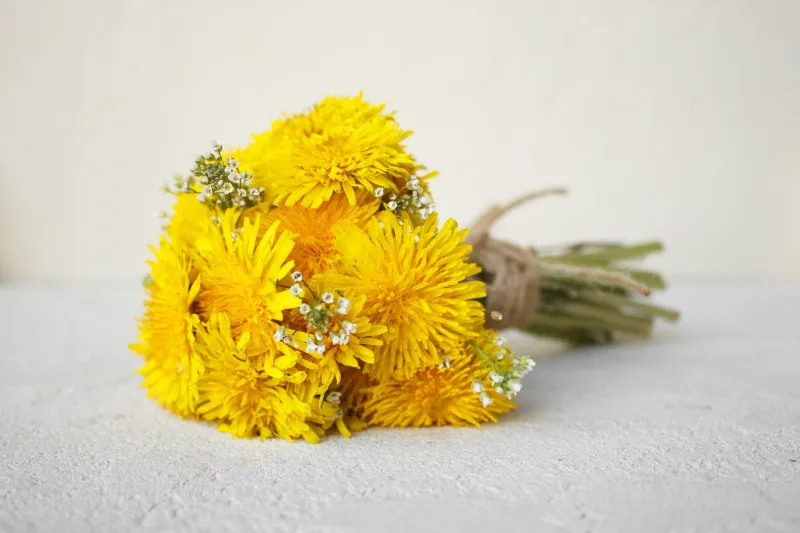
Six Hundred People, One Bottle a Day: Inside Our Dandelion Root Kvass Cult
Every morning at 7:15, before the espresso machine is even warm, someone knocks on the kitchen door. It's usually the same question: any kvass today?
The answer, most days, is no. We bottle roughly twenty-four 10-ounce bottles of dandelion root kvass at a time, and they're gone by 10 a.m. The waitlist — which started as a clipboard by the register — now sits north of six hundred names. We didn't market this drink. We didn't photograph it for Instagram. It spread the old way: someone tried it, made a face, then made their friend try it.
Here's how a weed root ended up with a fan club.
It Started With Compost Guilt
Dandelion greens have been on our menu since day one — the salad, the braised greens, the pesto in spring. But every case of foraged dandelions came with a pile of roots we had no plan for. Throwing them in the compost felt wrong for a kitchen that preaches whole-ingredient cooking.
Around the same time, our chef de cuisine kept raving about a kvass she'd tasted at a Russian bakery in the Richmond District — a lightly fermented, faintly sour drink her grandmother used to make. Traditional kvass is a bread ferment, but Eastern European home kitchens have long made root versions with beets, carrots, and yes, dandelion.
So we tried it. The first batch was terrible — vinegary, muddy, aggressive. The fourth batch was something else entirely: lightly effervescent, earthy, gently bitter, with a finish that tasted like the smell of rain on pavement. We put it on the menu as a staff drink. Guests kept ordering it off the staff's table.
The Science of Letting Go
Kvass is a wild ferment, which means we don't pitch a lab-grown yeast. The microbes — mostly wild yeasts and lactic acid bacteria already living on the root's skin — do the work themselves. All we do is create good conditions.
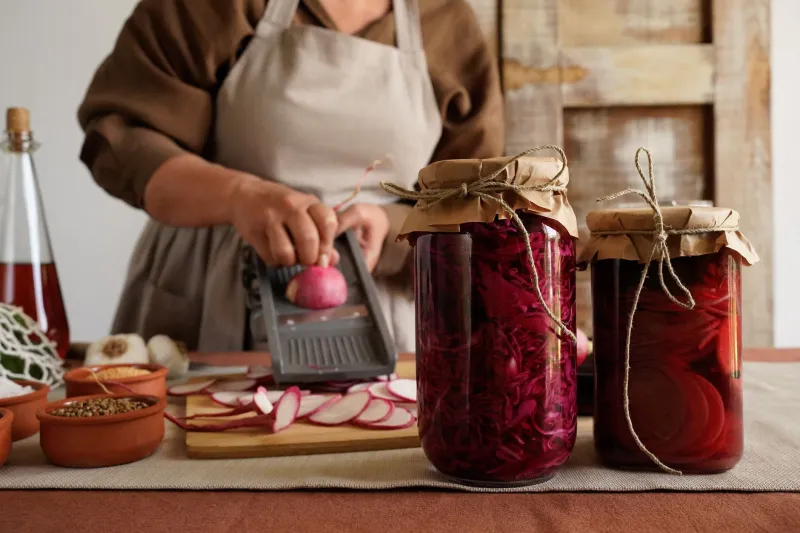
The process looks like this: scrubbed dandelion roots get roasted lightly to concentrate their sugars, then submerged in a brine with a little raw honey and a piece of rye sourdough crust (a nod to traditional kvass that gives the wild yeasts a head start). The jar sits at room temperature for three to four days.
During that window, a quiet negotiation happens. Lactic acid bacteria drop the pH, making the environment hostile to spoilage organisms. Wild yeasts eat the sugars and produce carbonation and trace ethanol — barely any, less than a very ripe banana. The bitterness in the root, from compounds called sesquiterpene lactones, doesn't ferment away. It softens, rounds out, and becomes the backbone of the drink.
That bitterness is the point. Americans have spent seventy years breeding bitter out of our food and drink. Now it's back — in amaro bars, in hop-bomb IPAs, in bitter spritzes on every corner café menu. Bitter reads as adult, as considered, as the opposite of syrupy. A bitter soda that isn't loaded with sugar occupies a genuinely empty shelf in the American drink landscape, and our kvass landed right in it.
Why We Can't Just Make More
People ask why we don't scale up. The honest answer: wild fermentation doesn't scale like a recipe, it scales like a garden.
The roots come from two foragers in Marin and Sonoma who dig them after the first fall rains, when the plants push energy back underground. Every batch of roots carries a different microbial population, so every batch of kvass behaves slightly differently. Some batches fizz like champagne; some are almost still. We've learned to read the jars the way you read a sourdough starter — by smell, by the bubble pattern, by the ring of foam at the rim.
We could standardize with a commercial yeast and a controlled culture. We'd lose the thing people are waiting in line for. So the waitlist stays, and we've made peace with it. Six hundred people is a lot, but it's also six hundred people who now know what dandelion root tastes like.
Brew It Yourself: A Home Kvass Guide
If you can't get a seat (or a bottle), here's our home-scale method. It's forgiving, cheap, and hard to mess up badly.
You'll need:
- About 1 pound of dandelion roots (forage from unsprayed land, or ask a farmers market vendor — some herb farms sell them in fall)
- 1 quart of filtered water
- 1 tablespoon raw honey
- A small crust of rye or sourdough bread
- A half-gallon mason jar and a cloth cover
Method:
- Scrub the roots well — leave the skins on, since that's where the microbes live. Chop into half-inch coins.
- Roast at 350°F for about 20 minutes, until fragrant and lightly browned. This deepens the flavor and caramelizes some sugars.
- Pack the warm roots into the jar. Dissolve the honey in the water and pour over, covering the roots by an inch.
- Tuck in the bread crust. Cover with the cloth and secure with a rubber band.
- Keep at room temperature, out of direct sun. Stir once a day with a clean fork. Bubbles should appear by day two or three.
- Taste daily starting on day three. You're looking for lightly sour, gently fizzy, pleasantly bitter. When it hits that balance — usually day 4 or 5 — strain, bottle, and refrigerate.
The chilled kvass will keep for about a week, slowly getting more sour. Some of our regulars prefer day-ten kvass over day-four. That's the fun of wild ferments: you're not following a recipe so much as hosting one.
One warning: once you've made it, you may find yourself eyeing your lawn differently. We did.