The Cold Room Is Our November Sommelier
On the first cold morning of November 2026, the walk-in off our kitchen smells less like a restaurant and more like a cellar. Wet stone. Clean dirt. A faint sweetness from carrots that have been resting since the last farm delivery. The air is cold enough to make you zip your jacket, but not cold enough to stop time. That is the point. Our late-fall menu does not start at the stove. It starts in that room.
At Dandelion SF, November is not a month for forcing summer produce to hang on. It is a month for listening to what the ground has already given us and treating storage crops like the main event. Beets, cabbage, carrots, potatoes. Vegetables that do not need a plane ticket or a plastic clamshell to feel special. They need cool air, a little humidity, and someone to pay attention.
The Room Before the Plate
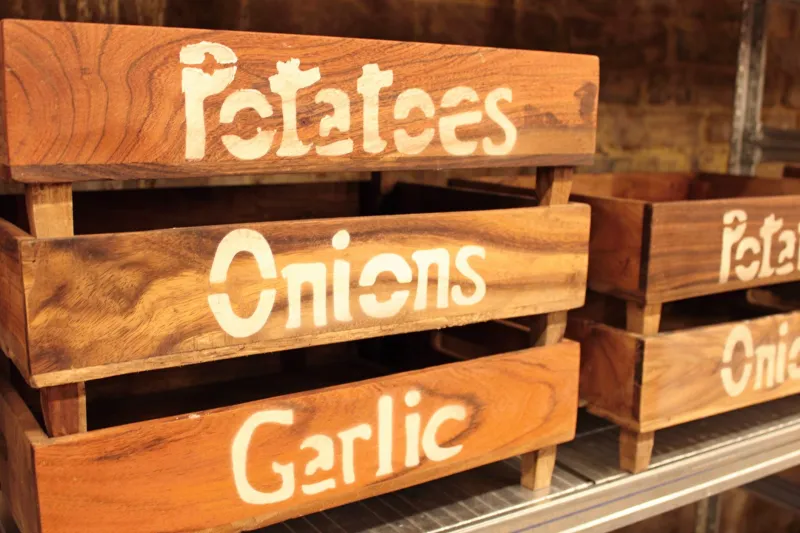
The cold room is not glamorous. It is a narrow space lined with crates and a whiteboard that looks like a weather chart for vegetables. We keep it between 36 and 40 degrees Fahrenheit, with enough airflow to keep things dry but enough moisture to keep roots from turning limp. Carrots go into damp sand. Beets get sorted by size, because a baseball beet and a golf-ball beet cook at different speeds. Cabbage sits in open crates so it can breathe. Potatoes stay dark and cool, away from the onions we keep in a separate corner because nobody in a small kitchen wants to learn that lesson twice.
The room has a rhythm. On Monday, we check for soft spots. On Wednesday, we rotate crates. On Friday, we look at what is left and write the next menu around it. That sounds romantic, but it is mostly practical. A restaurant can talk about seasonality all it wants, but seasonality is a logistics problem before it is a plate. The cold room is where the problem gets solved.
What Gets Buried, What Gets Crocked
Some crops go into cold storage almost exactly as they came off the farm. Others get a second life before they ever hit a pan. Cabbage is a good example. Part of it gets shaved raw for crunch. Part of it goes into a crock with salt and time, turning into a tart, fizzy ferment that can wake up a rich dish in the middle of the month. Carrots get pickled with a little warmth from dried chile. Beets get roasted, cooled, and dressed with something sharp. Potatoes are the quiet workers. They get boiled, smashed, crisped, and folded into dishes that do not need to announce themselves.
We source most of this from farms around the Bay Area and just beyond it: Bolinas, Watsonville, Capay Valley, and a handful of smaller growers who send us the kind of cabbage that weighs more than it looks like it should. The short drive matters. So does the fact that these crops are built for storage. A November menu is not a compromise. It is a different kind of abundance.
The Menu Is a Calendar, Not a Wish List
When guests ask why the menu changes so often in late fall, the honest answer is that the cold room tells us what to do. If we have a crate of small beets that are starting to feel tender, they go into a dish on Tuesday, not next week. If the cabbage is especially sweet after a cold snap, we use more of it raw. If the potatoes are holding well, we can relax and let them become the comfort food they are meant to be.
This is not a chaotic way to cook. It is a disciplined one. A wish-list menu starts with an idea and then hunts for ingredients. A calendar menu starts with what is already here and asks how to make it taste like right now. In San Francisco, right now means fog on the window, a little chill in the air, and food that feels grounded rather than imported. We are not trying to recreate summer. We are trying to make November feel like a place you want to stay.
Why Patience Tastes Like San Francisco
There is a reason a beet that has spent a few weeks in cold storage tastes different from one that went straight from field to pan. The starches settle. The sugars concentrate. The texture evens out. The same is true of cabbage that has had time to ferment and potatoes that have been allowed to rest. Patience does not just preserve these vegetables. It changes them.
That change is the beginning of the menu. A roasted beet with a little citrus and a spoon of something creamy tastes sweeter because it had time to become itself. A pile of fermented cabbage cuts through a plate that might otherwise feel heavy. A potato dish can be simple without being boring because the potato is doing what a good potato should do. None of this is flashy. It is the kind of cooking that rewards attention.
And attention is what we are built on at Dandelion. Local roots, seasonal plates, a kitchen that would rather work with what is here than pretend it is somewhere else. November is not the month we endure between tomatoes and citrus. It is the month we get to show what a cold room and a little restraint can do.
Come Sit With the Season
Our late-fall menu is available now at Dandelion SF, and reservations are open for the coming weeks. Come in from the fog, order something built from a crate of roots, and see what patience tastes like. The cold room will keep doing its quiet work in the back. You will taste it at the table.