The Reservation for One Is Not a Problem to Solve

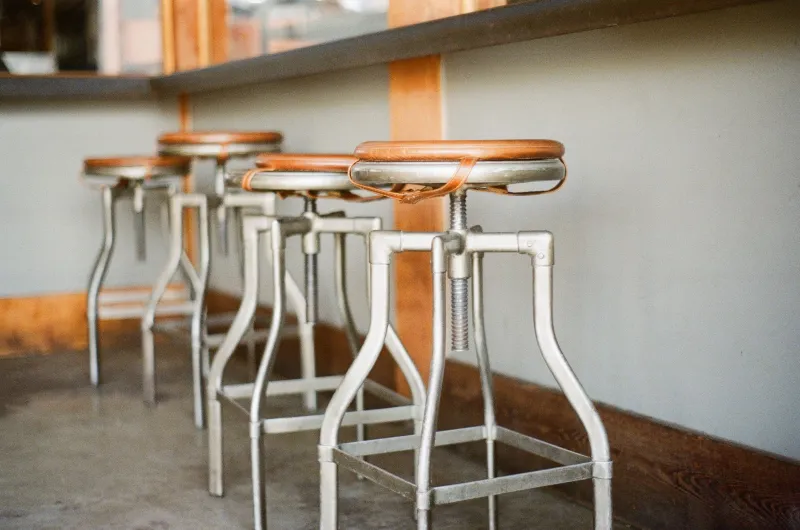
Photo: Hugh Llewelyn, CC BY-SA 2.0, via Wikimedia Commons
There's a certain sound a restaurant makes when someone walks in and says, “table for one.” Half the room looks up. The host's eyebrows do a small, involuntary thing. Somewhere in the back, a server recalculates the night. We know that sound intimately, because at Dandelion it happens roughly one in nine weeknight reservations, and over the past couple of years it's added up to somewhere north of three hundred solo covers.
We started paying attention because of a note in the reservation system. A guest booking for one had typed, “Please don't seat me in the corner by the bathroom. I'm not sad, I just like eating here.” That note did more to rewrite our floor plan than any consultant could have.
The Counter Is Not a Consolation Prize
For our first year, the six stools at the counter were where solo diners went. It was easy math: one body, one stool, no two-top sacrificed on a busy Saturday. What we didn't account for was how many people read that stool as a verdict.
Now we ask. Not “just one?” — that word does an astonishing amount of damage in four letters — but simply: “Counter or table?” Some guests want the counter because they can watch the pass and chat with the cook finishing their plate. Others want a two-top by the window, a book propped against the water glass, and no conversation whatsoever. Both are correct. Neither is a downgrade.
We also stopped bussing a solo table like it was a countdown timer. Clearing a plate the second the fork drops is a message, whether you meant it or not.
Pace Is the Whole Ballgame
Here's the thing nobody tells you about cooking for one: the tempo is entirely different, and we were terrible at it at first.
A party of four naturally paces itself. Plates arrive, conversation fills the gaps, someone orders another glass, the night stretches. A single diner has no built-in buffer. If the kitchen fires everything at once, the meal is over in forty minutes and the guest feels processed. If we drag it out, they feel managed.
Our solution was to hand the tempo back. Solo guests get asked, early and plainly, whether they're in a hurry or settled in for the evening. If it's the latter, we'll hold the second course until the first plate is actually finished, not merely abandoned. We'll offer a half-glass instead of a second full one. We'll ask before clearing bread. Small courtesies, but they add up to a night that lasts ninety minutes instead of forty-five, without a single upsell.
Smaller Formats, Wider Menu
The most useful thing we built for solo diners wasn't a seat. It was a shorter menu.
Our four-course short menu runs $68 and changes with whatever the market hands us that week — in mid-November that's meant roasted delicata with brown butter and sage, a chicory salad scattered with persimmon and toasted walnut, celery root agnolotti, and a slab of quince tart to finish. It's the same kitchen, the same sourcing, the same care. It's just scaled so one person can actually reach the end of it and still want dessert.
Alongside it, the half-glass program does a lot of quiet work. Two ounces of wine is enough to taste a pairing without committing your evening to a bottle you'll carry home on Muni. Solo diners order more half-glasses than any other group in the room — an average of 2.4 — and they spend more per head on beverage than couples do. That surprised us. It shouldn't have. Nobody orders a flight to get drunk; they order it to have a conversation with the food.
What Restaurants Get Wrong
The mistakes are consistent enough to list.
Assumption one: solo means lonely. It doesn't. It means hungry, or curious, or in town for work, or celebrating something that doesn't require an audience.
Assumption two: solo means cheap. Wrong, and honestly a little insulting. Our one-tops have the highest beverage attach rate in the room.
Assumption three: solo means fast. Sometimes. Ask.
Assumption four: the sad table. If your only single-cover seats are next to the service station and under a speaker, you've told that guest exactly what you think of them before they've ordered.
And the fifth, the one that took us longest to unlearn: hovering. A solo diner doesn't need more check-ins to feel welcome. They need the check-in that matters — right after the first bite — and then a little room to breathe.
The Economics of One
We won't pretend it's pure altruism. A one-top turns faster, which is good on a busy Friday and less good on a rainy Wednesday. So we've gotten deliberate about when we release those seats. Solo bookings at the counter open up same-day, all night. The two-tops open to parties of one at 9 p.m., when the second seating has thinned and the room has relaxed. Saturday at 7:30, a table for one is a real financial decision, and we treat it like one — which sometimes means the answer is the counter, and sometimes means we find a way.
We've also stopped punishing single diners with the same deposit rules we built for no-shows on four-tops. Our no-show math hasn't gotten any kinder, but a party of one who cancels leaves a stool, not a table, and pricing that accordingly has cost us very little and bought us a lot of goodwill.
What Changes When You Seat People Alone
The dining room gets quieter and better. A guest eating alone pays closer attention to the plate — they notice the brown butter, they ask what's in the dressing, they tell you when something's off. They notice the room, too. More than once a solo diner has flagged a wobbly table leg or a draft from the door before any of us did.
San Francisco has always been a city of people who arrived from somewhere else, and a good number of them eat dinner by themselves on a Tuesday. The least we can do is set the table properly for it.